In printed circuit board (PCB) manufacturing, selecting the right surface finish is critical to ensuring the longevity and reliability of electronic devices. One of the most durable and high-performance finishes used in specialized applications is hard gold plating.
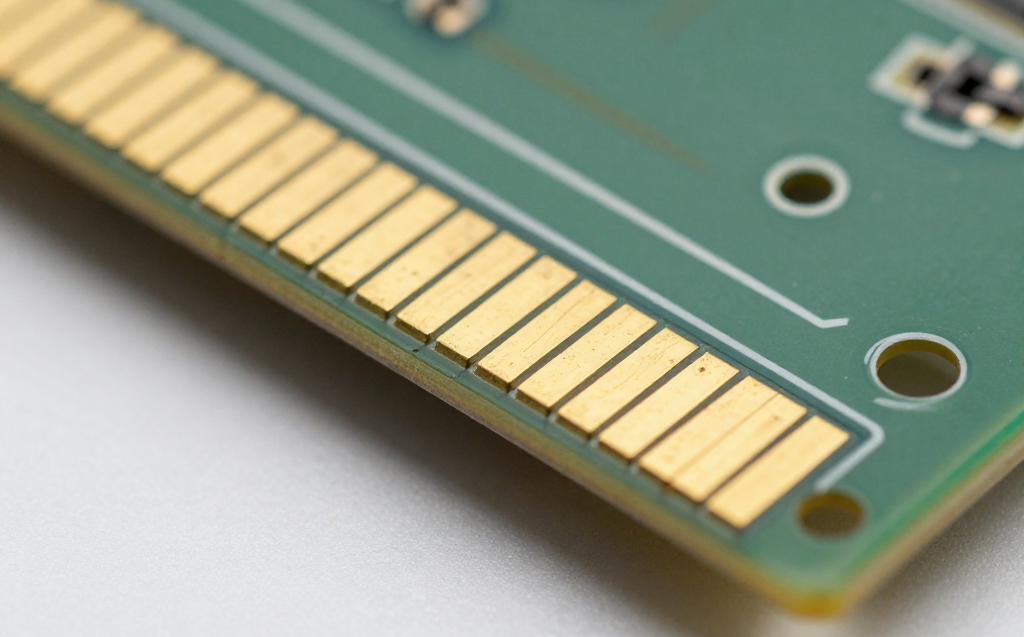
This finish is commonly applied to edge connectors, gold fingers, and contact pads, where mechanical wear and repeated insertion cycles are frequent. This post breaks down everything you need to know about hard gold plating, from composition and thickness standards to manufacturing considerations.
For PCB Designers & Commodity Managers: If you’re specifying edge connectors, gold fingers, or high-cycle contact pads, this guide will help you choose between Type I, II, and III hard gold—and avoid costly over-specification or solderability failures.
What Is Hard Gold Plating?
Hard gold plating, also known as electrolytic hard gold, is a surface finish applied to specific areas of a PCB where durability and wear resistance are paramount. Unlike soft or immersion gold finishes, which are used primarily for soldering, hard gold plating features a gold electrodeposit that has been alloyed with cobalt or nickel.
This alloying significantly increases hardness and wear resistance, making hard gold ideal for demanding environments. This finish is typically applied to:
- Gold fingers on edge connectors for Rigid PCBs and Flex PCBs (memory modules, expansion cards)
- Keypads and switches requiring millions of actuations
- Contact pads in high-cycle applications
- Card edge connectors exposed to frequent mating cycles
Hard gold plating is defined by industry standards including ASTM B488 and MIL-DTL-45204, which specify gold purity, hardness, and thickness classifications.
Composition & Structure of Hard Gold Plating (For Engineers)
Hard gold is an alloy of gold and a small percentage of a non-noble metal, typically cobalt or nickel, which forms a refined, fine-grained, face-centered cubic (fcc) crystal structure.
Here’s an overview of the composition and the structure of hard gold plating:
1. Composition of Hard Gold: Hard gold plating is an alloy, not pure gold. The following are the alloying elements introduced during the electroplating process.
- Gold (Au): The primary component, typically making up 99.0% to 99.7% of the deposit.
- Alloying Elements: The intentional addition of non-noble metals in small quantities is the key to its mechanical properties. Cobalt-hardened gold typically contains 0.1% to 0.3% cobalt by weight, though the cobalt content can range up to 1–3% by weight depending on the plating bath formulation and desired hardness.
- Cobalt (Co): The most common hardening agent.
- Nickel (Ni): Another frequently used alternative for hardening.
- Iron (Fe): Sometimes used, though less common than cobalt or nickel.
2. Structure of Hard Gold: The addition of the alloying elements fundamentally alters the microstructure of the gold deposit. Key aspects of the structure of hard gold include:
- Crystal Structure: Like pure gold, hard gold retains a face-centered cubic (fcc) crystal structure.
- Grain Structure: The alloying elements inhibit normal crystal growth during deposition, resulting in a significantly finer, more refined grain structure. Hard gold deposits have a very fine grain structure, typically in the nanometer range, which contributes to their high hardness and wear resistance.
- Hardening Mechanism: The high hardness of Type I and Type II hard gold (typically 130-200 Knoop Hardness) is primarily a result of this fine grain size, which is explained by the Hall-Petch effect, where smaller grains impede the movement of dislocations and thus increase the material’s strength and wear resistance. Type III soft gold, by contrast, has a maximum hardness of approximately 90 Knoop
Standard Thickness Requirements for Hard Gold Plating (For Buyers & PCB Designers)
The thickness of the gold layer plays a significant role in both performance and durability.
Below is a well‑structured breakdown of standard thickness guidelines for hard gold plating.
- Class 1: Intended for low-demand or limited-mating applications, Class 1 hard gold plating typically uses 10–15 micro-inches (μin) of gold over 100 μin of nickel. This class is suitable for connectors that experience minimal insertion cycles and where cost control is a priority.
- Class 2: The typical standard for moderate-use edge connectors and gold fingers is 30 micro‑inches (μin) of gold plated over 100 μin of nickel. This level of thickness provides sufficient wear resistance for applications that do not involve extreme mechanical stress.
- Class 3: For more demanding applications with high‑cycle or heavy-duty edge connectors, 50 μin of gold over 100 μin of nickel is recommended. This thickness ensures that the gold finish can withstand frequent insertion/removal cycles without degradation.
Type I, II, and III Gold Classifications
Gold coatings are classified into Type I, Type II, and Type III based on their purity and hardness characteristics.
These classifications help engineers and manufacturers choose the right finish for performance, wear resistance, and reliability:
- Type I Gold Plating: Type I is pure gold (99.7% minimum purity) and is soft in nature. It is not a hard gold. Type I provides excellent corrosion resistance and excellent solderability but is not intended for high-wear applications. It is used for low-stress electrical contacts, semiconductor components, and thermo-compression bonding.
- Type II Hard Gold Plating: Type II hard gold plating is the most common hard gold finish for PCB contacts that require wear resistance and durability, such as gold plating on connectors and edge fingers. It typically has a minimum gold purity of about 99.0%, (Code A) or 95.0% (Code B), with alloying elements (such as nickel or cobalt) added to improve hardness and wear performance. Type II plating is designed for heavier mechanical usage and is often what engineers mean when they specify a hard gold PCB finish for high-cycle connector areas.
- Type III Gold Plating: Type III includes all gold plating’s having less than 95.0% gold content by weight. Type III is not high-purity gold. It is not typically used for high-wear PCB contacts but may be specified for semiconductor components, nuclear engineering, and high-temperature applications. Understanding it helps clarify where Type III fits relative to other finishes.
Solderability Considerations for Hard Gold Plating
When you use hard gold plating on a PCB, you must carefully consider its impact on solderability.
- Co-deposited metals: Hard gold contains non-noble metals like nickel or cobalt for wear resistance, but these can oxidize during soldering, degrading the joint.
- Thickness: A thicker layer allows more gold to diffuse into the solder joint. If the gold exceeds 3% by mass in the solder joint, it can lead to embrittlement and potential failure. If the layer is too thin, porosity can form, allowing the nickel underplate to oxidize and compromise the joint.
- Purity: Hard gold deposits are not pure gold. They include alloying elements like cobalt or nickel to give the plating hardness. These additional metals may oxidize under soldering heat, reducing the integrity and reliability of the solder joint.
- Application: Hard gold is typically used on non-solderable areas like connectors and requires selective application, which adds complexity in high-density designs such as HDI PCBs or Microelectronics PCBs..
Critical Design Rule: Never specify hard gold (Type I or II) on SMT pads or through-holes that require soldering. The cobalt/nickel alloying elements will compromise solder joint reliability. Use ENIG or Immersion Silver for solderable areas, and hard gold only for contact surfaces.
Cost & Lead Time Implications: Hard gold plating adds significant cost compared to ENIG or HASL due to the gold thickness (30-50 μin vs. 2-5 μin for ENIG) and selective plating processes. Supply chain managers should budget for ~20-30% higher unit costs on hard gold PCBs and extended lead times of 3-5 days for selective gold processing. At HT Global Circuits, we provide transparent quoting that separates hard gold fingers from the base PCB cost.
For Designers: Always request a selective gold process from your fabricator. HT Global Circuits specializes in selective gold PCB manufacturing, ensuring hard gold is placed exactly where needed and never on solderable areas.
Advantages of Hard Gold Plating
Hard gold plating offers several benefits that make it an attractive option for many PCB applications.
The following are its benefits.
- Durability and Wear Resistance: Hard gold provides an extremely wear-resistant surface, making it perfect for edge connectors that undergo frequent insertion and removal.
- Long Shelf Life: Gold doesn’t tarnish or oxidize over time, so PCBs with hard gold plating can remain in storage for long periods without degrading. This makes hard gold plating an excellent choice for high-quality, long-lasting products.
- Lead-Free: Hard gold plating is a lead-free surface finish, making it compliant with RoHS standards. This is a key consideration for manufacturers who need to meet environmental regulations.
- Selective Application: Hard gold is typically applied selectively to connector areas and gold fingers, avoiding solderable areas to prevent gold embrittlement. HT Global Circuits’ selective gold PCB process ensures hard gold is applied only where needed.
- Low Contact Resistance: The gold layer maintains low contact resistance over time, which is essential for applications that require reliable and consistent electrical connections.
Choosing the right hard gold PCB finish requires the right balance of thickness, wear performance, and manufacturing control.
At HT Global Circuits, we manufacture PCBs with controlled hard gold plating thickness, selective gold processes, and strict quality checks for connector applications. Share your design files and let our team validate your hard gold requirements.
Cost & Lead Time Realities for Supply Chain
Hard gold plating adds cost and time compared to standard finishes like HASL or ENIG:
- Cost premium: 15-25% higher unit cost due to gold thickness and selective plating processes.
- Lead time extension: Add 3-5 working days for selective gold processing.
- Minimum order quantities: Some suppliers require panelization for selective gold—HT Global Circuits offers flexible MOQs.
Supply chain managers should work with their PCB partner early to validate hard gold requirements against actual cycle life needs. Over-specifying thickness (Class 3 vs. Class 2) drives unnecessary cost.

Why Choose HT Global Circuits for Hard Gold PCBs?
At HT Global Circuits, we manufacture PCBs with controlled hard gold plating thickness, selective gold processes, and strict quality checks for connector applications. Whether you need Type II hard gold for high-cycle edge connectors or a mixed finish with ENIG and hard gold fingers, our engineering team validates your requirements before production.
Ready to specify your next hard gold PCB?
Share your design files with our team. We will review your hard gold requirements, recommend the optimal Type and Class, and provide a competitive quote with transparent lead times.
Contact HT Global Circuits today or upload your Gerbers for a hard gold plating consultation.