Before a product reaches mass production, it goes through a critical phase that separates successful electronics from expensive failures. This phase is PCB prototyping. At its core, it’s the creation of an initial version of a printed circuit board (PCB) to test design functionality before committing to mass production.
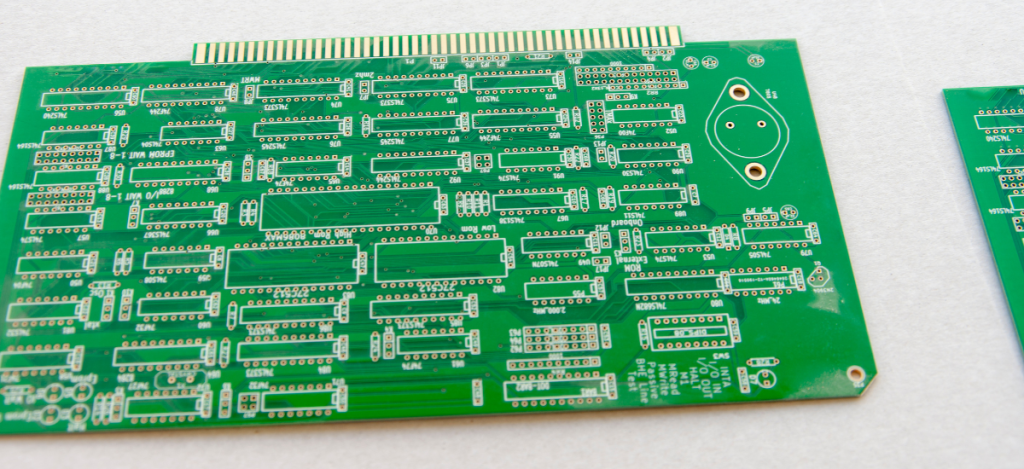
Prototypes allow engineers to check if components fit correctly, signals are stable, and thermal behavior meets expectations. This early detection reduces risk, avoids costly mistakes, and gives teams confidence that the final product will perform as intended.
This post explains PCB prototyping in detail, including its key benefits, the step-by-step process, and the best practices that help ensure a reliable transition from design to production. For fast, accurate PC prototyping services, review our quick-turn prototyping options.
What is PCB Prototyping?
In technical terms, it is the process of fabricating one or a small batch of printed circuit boards based on your design files, for testing and validation before committing to a full production run. The following points explain the key characteristics and purpose of PCB prototyping:
- A PCB prototyping board differs from a production board primarily in intent and volume.
- Production runs optimize for cost per unit at scale, while prototyping optimizes for speed and accuracy of feedback. The quantities are small, and the turnaround is fast. The focus is on research and experimentation for further development.
- A PCB prototyping board is usually identical in design to the production board, but may differ slightly in material or layer count to speed up fabrication. Engineers use these boards to check electrical performance, mechanical fit, and component placement.
- Typical use cases include initial design verification, functional testing of a new product concept, evaluation of component placement and thermal behavior, and validation of signal integrity across layers. Prototyping is applicable when you are working with a new design, making a significant revision, or developing a new version of an old product.
Key Benefits of PCB Prototyping
The PCB prototyping benefits go beyond simply catching errors. They shape the entire development cycle in ways that are hard to quantify until you have experienced a project without them.
Here are some of the benefits.
- Early Error Detection and Correction: This is one of the most important benefits of PCB prototyping, as it allows design flaws to be identified and corrected at the prototype stage rather than after committing to large-scale production. Engineers can identify layout issues, incorrect footprints, component clearance problems, and thermal hotspots on a physical board. Corrections made during prototyping cost a fraction of what they cost in final production. A trace reroute on a prototype is a simple design file edit; however, the same fix after mass production means scrapping boards, reordering, and potentially delaying product launch, aside from huge costs.
- Faster Time-to-Market: Prototyping accelerates product development. Teams can run rapid design iterations, testing one version, applying feedback, and building the next within days rather than weeks. That compressed feedback loop moves products from concept to validated design far faster than sequential testing at the production stage would allow. For OEMs competing on product launch timelines, this is a significant aspect. Getting to market a few months earlier offers businesses a competitive advantage.
- Accurate Performance Verification: Simulation tools are valuable; however, their results cannot be compared with those of a physical board. Physical behavior, especially signal integrity, EMI, and thermal management, often differs from simulated environments. You can test whether connectors align properly, heat sinks function as expected, and traces handle the required current. These real-world checks are critical, especially in high-speed or high-power applications. A prototype gives you measured data from the actual board, not modeled estimates.
- Mechanical Fit verification: This is another area where physical testing is irreplaceable. With the prototype, you can understand if the physical board actually fits in the enclosure or if the connector heights clear the cover. These are some aspects you can better understand using a physical prototype rather than a 3D model.
- Facilitates Design Optimization and Innovation: Prototyping creates space for genuine experimentation. Teams can try different layer stackups, test alternative materials, or evaluate competing layout strategies with actual performance data. This kind of evidence-based iteration leads to better final designs than conservative first-pass approaches.
Step-by-Step PCB Prototyping Process
Understanding the PCB prototyping process helps OEM teams set realistic expectations and prepare proper inputs at each stage. Here is how it typically unfolds.
- Design and Layout Preparation: Everything starts with your design files. Design engineers create the PCB layout or schema using CAD tools such as Altium Designer, KiCad, or Eagle. This stage includes planning board stack-up, defining the number of layers, specifying controlled impedance requirements, and generating the Gerber files needed for fabrication. The design must include details regarding tolerances, drill files, and thorough documentation to ensure a smooth PCB prototype and fabrication. A design for manufacturability (DFM) review at this stage prevents avoidable delays.
- Prototype Fabrication: PCB prototype fabrication begins with material selection, which is done based on application requirements in terms of temperature, exposure to chemicals and elements, and so on. For instance, standard FR4 suits most low-to-medium frequency applications. Depending on the structural requirements, rigid, flex, or rigid-flex boards are chosen. Fabrication stage involves:
- Image transfer
- Etching of copper layers
- Drilling of vias and through-holes
- Copper plating
- Solder mask application
- Surface finishing
For multilayer designs, each layer is processed and then laminated together with precision alignment. The result is a bare board ready for assembly and testing.
- Assembly: This is a crucial stage where the components are mounted to the board, and a functional circuit is formed. This is mostly done using various automation techniques.
- Testing and Validation: Once assembled, the prototype board undergoes functional testing. This includes power-on verification, signal integrity checks, thermal profiling under load, and mechanical fit assessment within the target enclosure. This step ensures the board meets industry standards and device requirements.
- Refinement and Iteration: Test results feed directly back into the design. Some issues require minor trace adjustments. Others may prompt a layer stackup review or component substitution. The design is updated accordingly; if significant changes are required, another prototype revision is built and tested. By the end of this step, engineers have a validated design that minimizes risk in full-scale manufacturing.
Common Mistakes to Avoid in PCB Prototyping
Here are some mistakes you can easily avoid.
- Skipping prototype testing: Skipping validation steps to save time tends to surface those same problems later, at a far greater cost. A compressed test phase is not a shortcut; it is a deferred risk.
- Ignoring physical fit validation: Confirming mechanical dimensions only through CAD models is not sufficient. Boards need to be physically installed in their intended enclosures and tested against all mating components.
- Submitting incomplete documentation: Missing layer specifications, unspecified surface finishes, or incorrect file formats can confuse the fabrication team, causing possible errors and delays.
Need a Quick Turn PCB Prototype for a Mission-Critical Application?
If your product requirement is niche, limited to a specific period, or you are preparing for a new product development cycle, you need a service provider who can deliver fast and accurate prototypes while also ensuring a smooth transition from prototyping to full-scale production. HT Global Circuits offers quick-turn prototyping services that help OEMs bring designs to life efficiently. Contact their team today to find out how they can help you with these requirements.
Frequently Asked Questions
Most designs require two to three prototype iterations. Simple, well-understood designs with experienced teams behind them sometimes clear in one revision. Complex multilayer boards or designs with significant RF, thermal, or mechanical requirements may need more.
A PCB prototype is typically the first physical representation of a new design, used for functional and design validation. An engineering sample is usually a more advanced iteration, often built closer to final production specifications, used for final qualification, customer evaluation, or regulatory testing.
They may be used in some cases, particularly for low-volume applications where the prototype already meets all performance and reliability requirements. For high-volume OEM programs or safety-critical applications, it is standard practice to complete full qualification testing before any field deployment. Prototype boards that pass final testing are sometimes used in controlled pilot programs or beta deployments, but this should follow a deliberate risk assessment.